
If you’ve only got a weekend in Budapest, then one of the neighbourhoods you must visit is the Jewish Quarter. While it doesn’t have the historical pedigree of Prague’s atmospheric Jewish Cemetery and medieval narrow streets, you’ll still find plenty of interesting snippets of history among the shabby chic lanes of this gentrified district.
Mixing up synagogues and Yellow Star Houses with quirky design shops and eccentric ruin bars, this neighbourhood is one of the most exciting places in the city.
Jewish Heritage in Budapest’s District VII
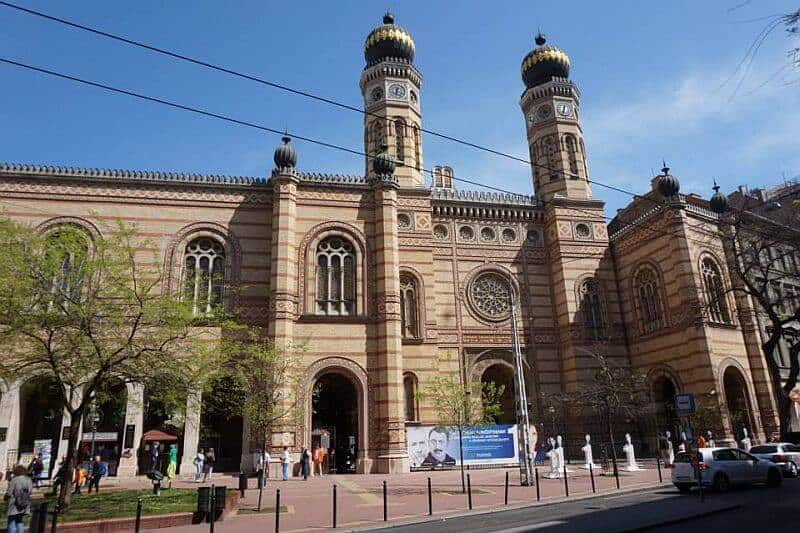
Dohány Street Synagogue Budapest – photo: bzsh.hu
Budapest’s first Jewish Quarter actually law across the river, where the community thrived since the rule of King Béla IV in the 13th Century. Following the Ottoman occupation, the Habsburgs deported many of the Jews, and for centuries they could not live inside the city limits. When Budapest unified Buda, Pest and Óbuda, in 1873, there was already a substantial population in the city. The area known as the Jewish Quarter today sprung up outside Pest’s city walls in the 18th century. The synagogues in the district reflect different aspects of Budapest’s Jewry.
The main synagogue in Dohány street is the largest synagogue in Europe, and the second-largest in the world, belongs to a group known as the Neolog Jews, a uniquely Hungarian branch of Judaism that wanted to modernize the religion with the intention of integrating into Hungarian society.
The art nouveau synagogue on Kazinczy Street, despite drawing its artistic influences from Hungarian folk art, actually, houses the Orthodox community. The third synagogue on Rumbach Sebestyén street served the community known as the ‘status quo ante’, after refusing to join either community or take part in the rift.
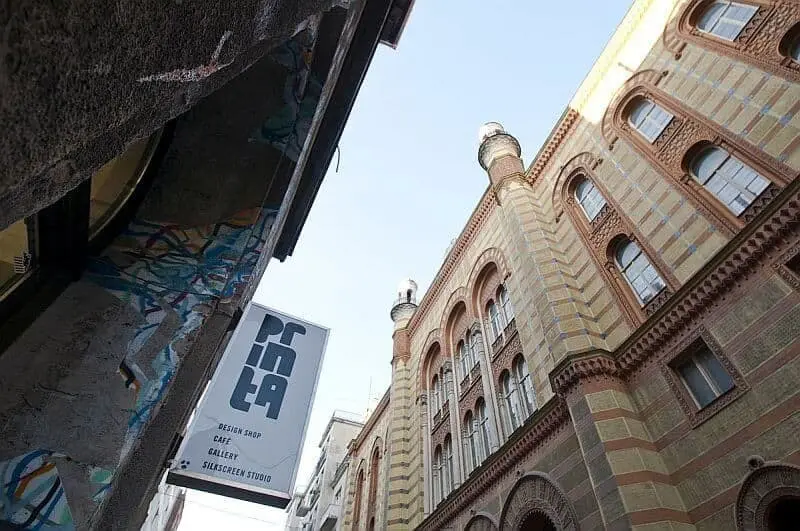
Each synagogue is aesthetically different, with the Great Synagogue and the Rumbach Sebestyén Synagogue sporting neo-orientalist styles of their own, while the Kazinczy Street Synagogue follows a more art nouveau look.
The Budapest Ghetto: History of the Jewish Quarter
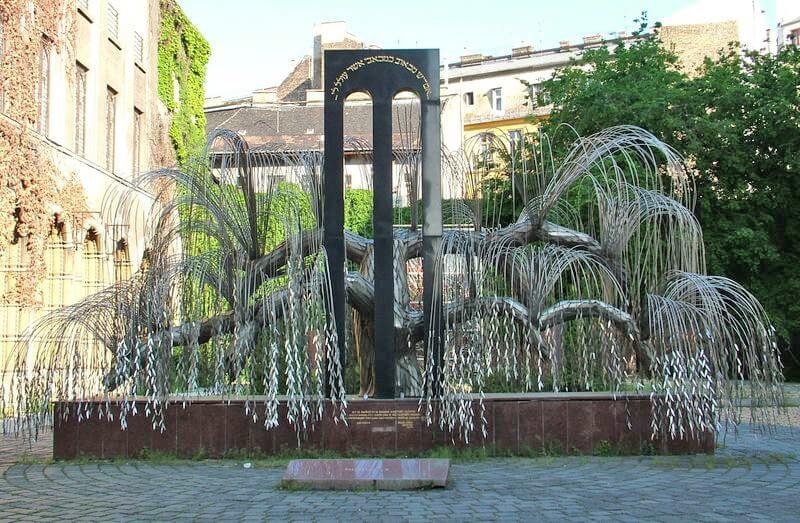
Holocaust memorial – photo: info.kazimir.hu
During the summer of 1944, over 2000 houses in Budapest were allocated the Yellow Star label, where the cities Jews had to relocate to in preparation for deportation. Due to the density of the Jewish community in the VII District, many of these houses were found in the Jewish Quarter. However, in the winter of the same year, the ghetto came about, which enclosed 70,000 Jews in a space less than a square mile.
While parts of it were closed in by a wall, much of the border was made up of the walls of the houses themselves and wooden planks. But if you take a walk down Király utca, take a peek into one of the houses close to Gozsdu udvar, you can see the memorial wall that has been rebuilt by the original stones to commemorate the old ghetto wall.
The Jewish Quarter Today: Ruin Bars, Street Food and Street Art
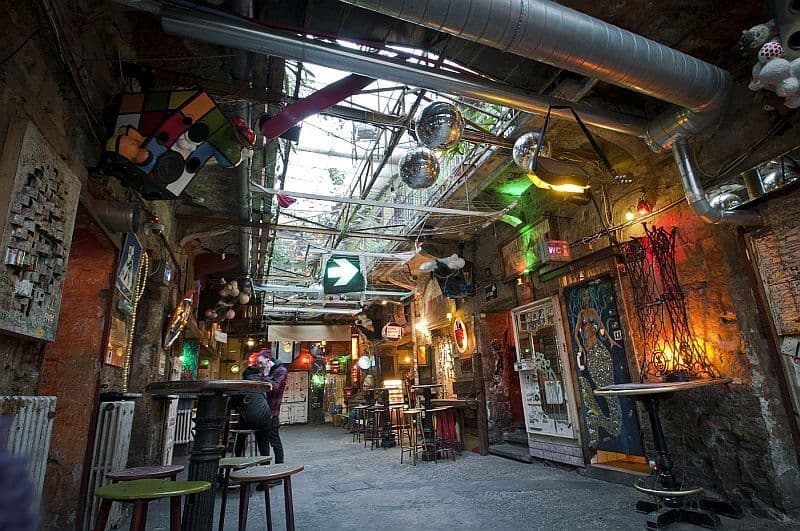
Szimpla kert ruin bar – photo: budapestflow.com
For decades, the Jewish Quarter lay in disrepair with crumbling houses and buildings that were considered for demolition, but ever since Szimpla Kert, the first ruin bar, set up shop, the quarter changed.
Embracing its shabby architecture, the ruin bar scene set the tone for this now. You’ll find the most famous ruin bars here, like Szimpla Kert, Fogas Ház and Instant, as well as lesser-known places like Kőleves Kert and new-wave ruin bar Mazel Tov.
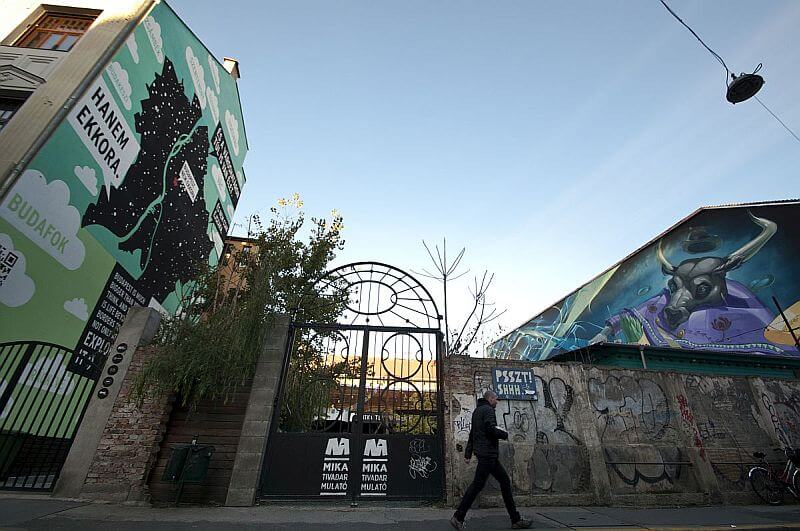
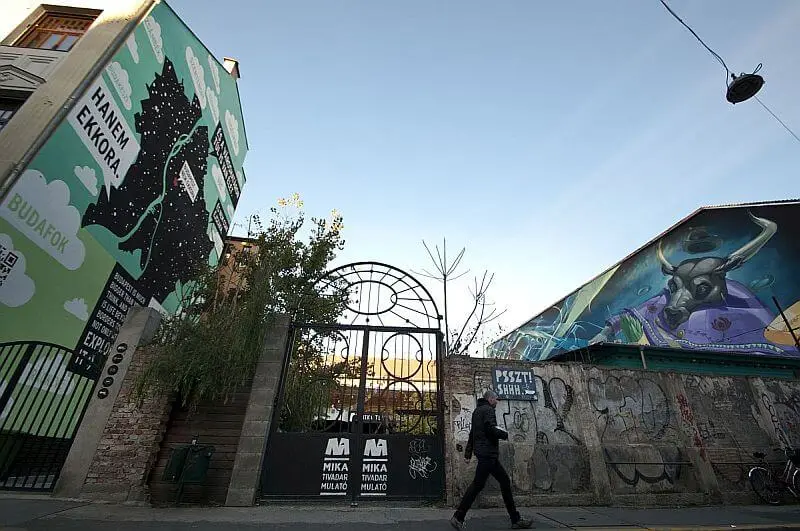
Street art in the Jewish Quarter – photo: budapestflow.com
Along the trendy streets adorned with street art and murals on the once empty firewalls, you’ll find quirky design shops, like Printa, which are loved for their silkscreen prints and upcycling. Another good spot is the Szimpla Design shop next to the famous namesake ruin bar.
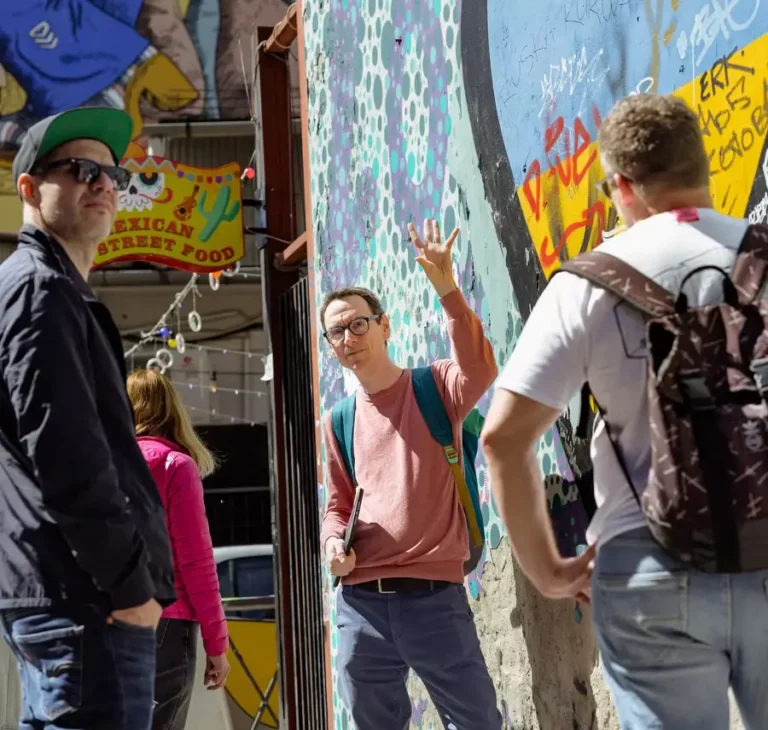
The Street Art Tour
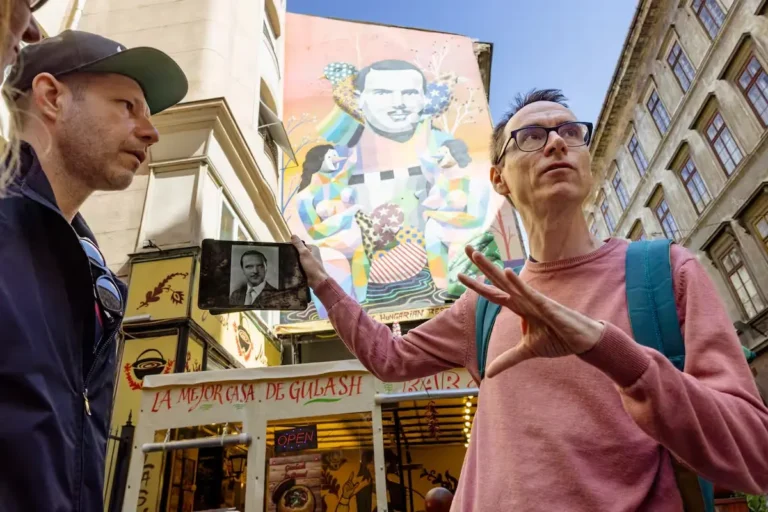
Explore Budapest’s street art scene and discover the stories, artists and local culture behind its murals, stickers and other urban artworks.
The Street Art Tour
Explore Budapest’s street art scene and discover the stories, artists and local culture behind its murals, stickers and other urban artworks.
- 3-hour guided walking tour
- Street art, culture & local stories
- Small groups with a local guide
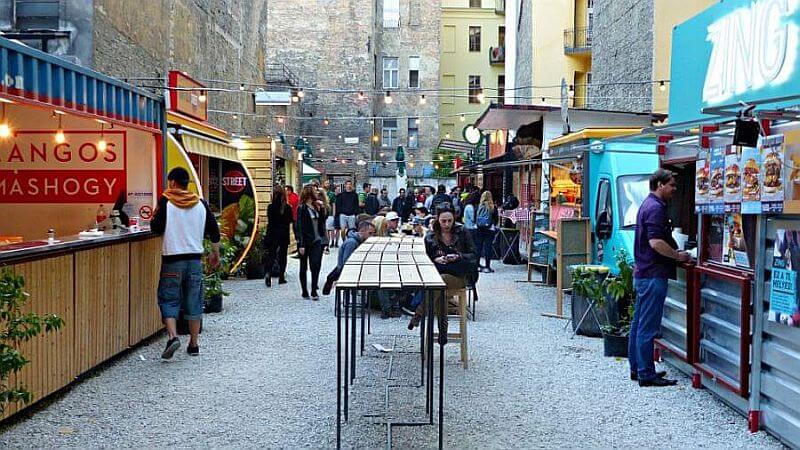
Karaván street food garden – photo: flashpackingduo.com
When it comes to to eating and drinking, the VII District also has plenty of place to check out, especially when it comes to the street food scene. If you want a selection of street food in one place, than Karaván, located next to Szimpla, has pretty much everything you’re looking for, from vegan snack to fried cheese, sausages and even lángos.
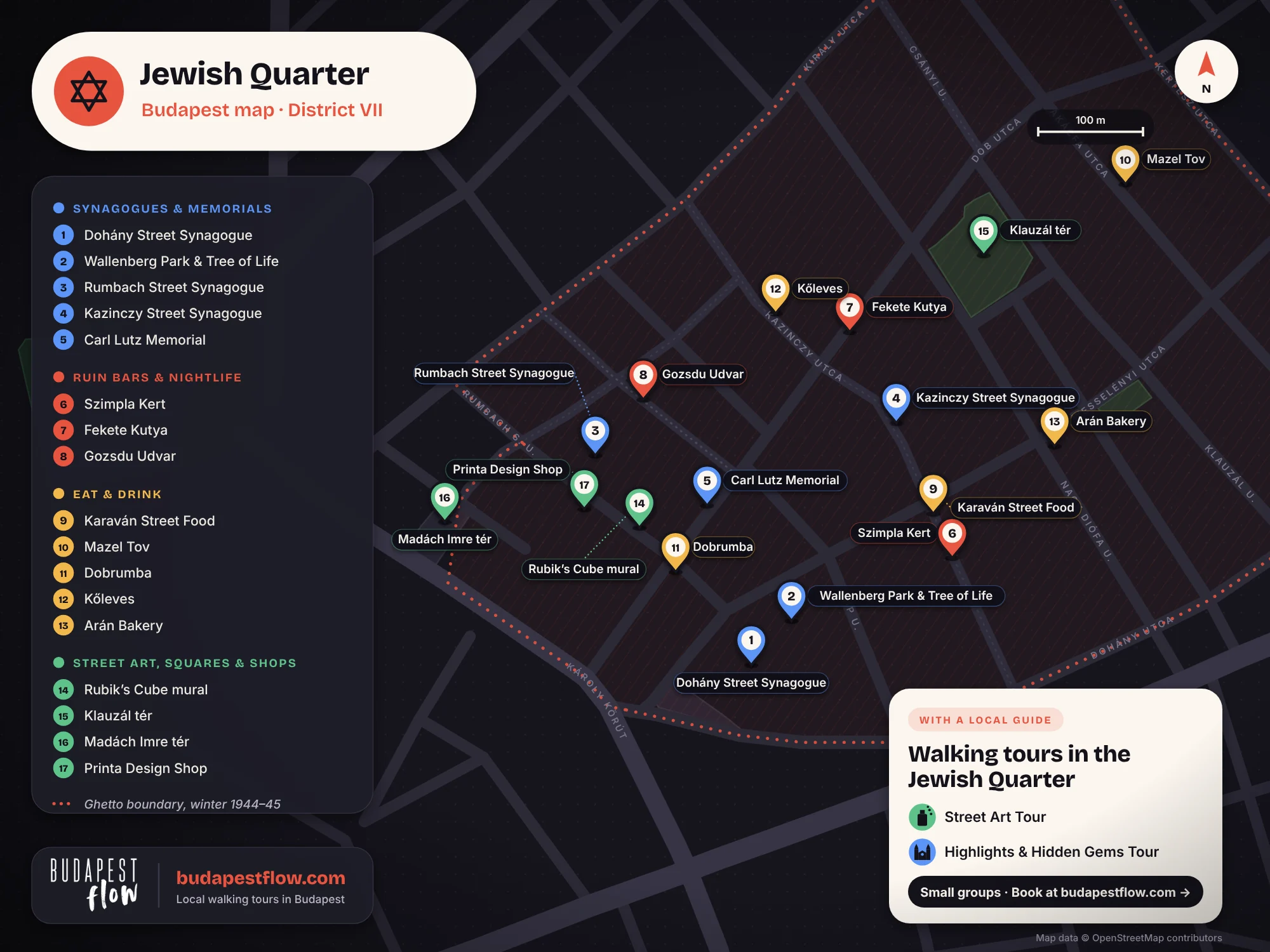
Jewish Quarter Budapest Map
The Jewish Quarter is in Budapest’s District VII (Erzsébetváros), roughly between Károly körút, Erzsébet körút and Rákóczi út, a short walk from the city centre. Tap a pin to see what is there: synagogues and memorials, ruin bars, places to eat, street art and design shops. The shaded area is the Jewish Quarter.


Save these places to your phone in Google Maps.
Printable overview
Keep this overview on your phone and the whole quarter is at hand, even without a data connection. Tap the map to open it full size, or download it as a PDF.
Things to See in the Jewish Quarter: Synagogues and Memorials
Dohány Street Synagogue (Great Synagogue)
The Dohány Street Synagogue is the largest synagogue in Europe and the heart of Jewish Budapest. Built between 1854 and 1859 in Moorish Revival style, it seats almost 3,000 people. The complex also includes the Hungarian Jewish Museum, the Heroes’ Temple and a courtyard cemetery, and in 1944 this street marked the edge of the Budapest Ghetto.
Rumbach Street Synagogue
Designed by the Viennese architect Otto Wagner and completed in 1872, Rumbach Street Synagogue was built for the Status Quo congregation in Moorish Revival style. After a major restoration it reopened in 2021 and now hosts exhibitions and concerts.
Kazinczy Street Synagogue
Completed in 1913, the Kazinczy Street Synagogue is the centre of Budapest’s Orthodox Jewish community. Its brick facade has Art Nouveau touches, and it is much quieter than Dohány Street. Kazinczy Street is also the cultural and culinary heart of the district, so combine it with a food stop.
Raoul Wallenberg Memorial Park and the Tree of Life
Behind the Dohány Street Synagogue, this memorial park honours the people who helped save Jews during the Holocaust, including the Swedish diplomat Raoul Wallenberg, Carl Lutz and Giorgio Perlasca. Its centrepiece is Imre Varga’s Tree of Life, whose metal leaves each carry the name of a Hungarian Jewish victim. Entry is usually included with a synagogue ticket.
Carl Lutz Memorial
On Dob Street, at the old entrance to the Budapest Ghetto, a bronze statue honours the Swiss diplomat Carl Lutz. He is credited with saving more than 60,000 Jews during the war by placing them in safe houses under Swiss protection.
Where to Eat and Drink in the Jewish Quarter
Szimpla Kert, the original ruin bar
Szimpla Kert opened in 2002 and is widely considered the first ruin bar in Budapest. Since 2004 it has occupied a derelict building on Kazinczy Street that was slated for demolition, now filled with mismatched furniture, old TVs and a Trabant used as seating. On Sunday mornings it also hosts a farmers’ market.
Fekete Kutya
Fekete Kutya (Black Dog) on Dob utca 31 is a gritty classic in the heart of the quarter and a relaxed gastropub, known for its beers, on tap or by the bottle, and for its pogácsa, a savoury scone. Find more bars like it in our favourite craft beer bars in Budapest.
Gozsdu Udvar
Gozsdu Udvar is a renovated passageway of connected courtyards between Király and Dob streets, lined with bars, restaurants and clubs. It is the most famous courtyard in Budapest, which also means it is busy, and it hosts markets, including a Christmas market. For quieter ones, see our guide to Budapest’s hidden courtyards.
Karaván Street Food
Karaván is a street-food courtyard on Kazinczy Street, right next to Szimpla Kert. Its stalls serve burgers, lángos, loaded sandwiches and vegan options, which makes it an easy lunch stop between sights. For more street food, see our top 10 places for high quality street food in Budapest.
Mazel Tov
Mazel Tov, at Akácfa utca 47, is a ruin pub meets restaurant in a beautifully lit, spacious courtyard. The menu is Mediterranean and Israeli, from shakshuka and hummus to grilled meat, and the cocktails are good too. It is one of the places in our guide to new wave Jewish restaurants in Budapest.
Dobrumba
Dobrumba at Dob utca 5 is a relaxed, stylishly designed restaurant serving tapas-style dishes that mix Middle Eastern and Mediterranean flavours and are made for sharing. For more places to eat in style, see our guide to dining and drinking in Budapest.
Kőleves Vendéglő and Kőleves Kert
Kőleves at Kazinczy utca 41 is a restaurant and a garden ruin bar side by side. The restaurant puts modern twists on Hungarian-Jewish food, such as goose broth with matzo ball or Jewish baked beans with egg, with tapas-style bites for lighter appetites, while Kőleves Kert is the leafy garden bar. More in our guide to new wave Jewish food in Budapest.
Arán Bakery
Arán Bakery at Wesselényi utca 23 is the place for croissants, cinnamon scrolls and coffee. The owners opened it after working in Dublin, and the name is Irish for “bread”. For more breakfast and coffee ideas, see our breakfast and coffee guide.
Street Art, Squares and Shops in the Jewish Quarter
Street art in the Jewish Quarter
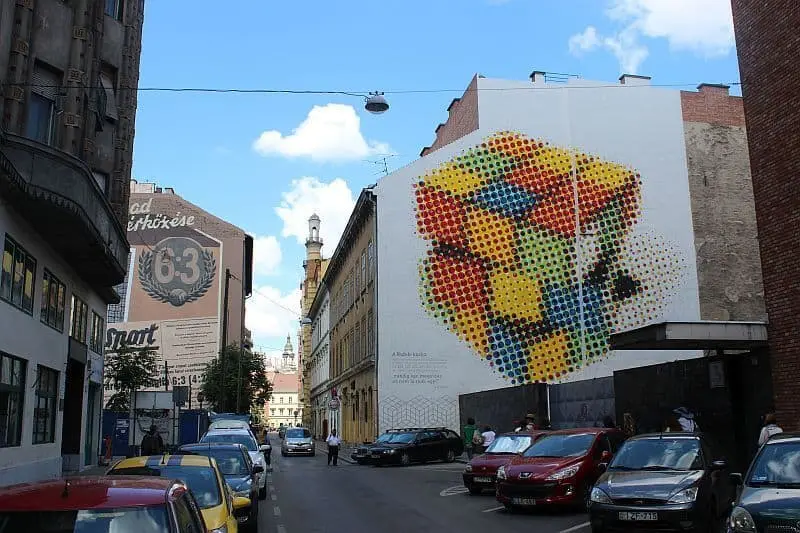
The whole Jewish Quarter is full of street art, with large murals on building walls and in courtyards, and it is one of the best districts in Budapest for it. A good place to start is the Rubik’s Cube mural, pinned on the map above. Follow our street art map and guide to find more, or join our Street Art Tour.
Klauzál tér
Klauzál tér is the green square at the heart of the quarter, a good spot to rest between the sights.
Madách Imre tér
Madách Imre tér is a lively square of bars, cafés and shops popular with young locals, home to the bars Telep and Központ and the boutique Ludovika. Look out for its red-brick archway.
Printa Design Shop
Printa is a sustainable design shop and café selling clothing, prints and artwork by Hungarian designers, known for its Budapest prints. It is also a creative hub where locals and visitors meet, and a stop we like to show on our tours. Read our interview with Printa founder Zita Majoros.
Want a local to show you around? Join our Ruinpubs and Alternative Spots Tour.
Where to Stay in the Jewish Quarter: Hotels and Hostels
Hostels and Budget Accommodation
Consistently ranked among the top hostels in the city, our hostel is all about community and social connections—beyond just the party scene. Located in the heart of the Jewish Quarter, it serves as a cultural and entertainment hub, with convenient access to landmarks like the Great Synagogue and the ruin bars.
Blending the affordability of a budget hotel with the comfort of an upscale hostel, Maverick City Lodge puts you at the heart of it all—just a minute from Szimpla Kert (the famous ruin bar), two minutes from Dohány Synagogue, and surrounded by the city’s best dining options. An ideal choice for budget-conscious couples.
Comfortable Mid-Range Stays
A chic hotel situated right across from Dohány Street Synagogue, featuring a cozy lounge with complimentary drinks and snacks.
A sleek and modern 4-star hotel in the heart of the neighborhood just steps from major attractions. Plus, the breakfast is a standout!
Luxury Stays in the Jewish Quarter
It is luxurious, stylish, and spacious, representing a significant indulgence. However, it is worthwhile for those a once-in-a-lifetime stay marked by exceptional luxury.
Housed in a breathtaking 1800s building, this is one of Budapest’s most exceptional hotels. For those seeking elegance, it doesn’t get better than this.
Jewish Quarter Budapest FAQ
Where is the Jewish Quarter in Budapest?
The Jewish Quarter is in District VII (Erzsébetváros), in the heart of Pest, roughly between Károly körút, Erzsébet körút and Rákóczi út. The Dohány Street Synagogue sits at its edge, and the main streets are Kazinczy, Dob, Király and Wesselényi. See it on the map above.
How do I get to the Jewish Quarter?
Take the M2 metro to Astoria for the Great Synagogue, or get off at Deák Ferenc tér, a walk of about ten minutes. Tram 6 runs along the Grand Boulevard with stops at Király utca and Wesselényi utca, and the 100E airport bus ends at Deák Ferenc tér. Inside the quarter the streets are best explored on foot, as most sights are within a ten-minute walk of each other.
What is the Jewish Quarter known for?
It is known for its synagogues and its history as the site of the 1944 Budapest Ghetto, but also for the ruin bars that opened in its derelict buildings, street art on the walls and in the courtyards, and a busy food scene. See our picks for sights, food and drink and street art and shops, or read our ten things you need to know about the Jewish district.
How long do I need in the Jewish Quarter?
Plan 2.5 to 3 hours for a walk through the main streets with a visit to the Dohány Street complex and the Rumbach Street Synagogue. Add a meal and a ruin bar and it easily becomes half a day. Our one day itinerary in the Jewish Quarter shows how to fit it all in.
Can you visit the synagogues in the Jewish Quarter?
Yes. The Dohány Street Synagogue is open to visitors, but it is closed on Saturdays and Jewish holidays and closes earlier on Fridays and in winter. The ticket covers the synagogue, the Hungarian Jewish Museum, the Raoul Wallenberg Memorial Park with the Tree of Life and the cemetery. Cover your shoulders and knees, and expect a security check. Check current hours and prices on the official website before you go.